The 5 M’s of Geriatrics: How They Shape Healthy Aging for Your Loved One
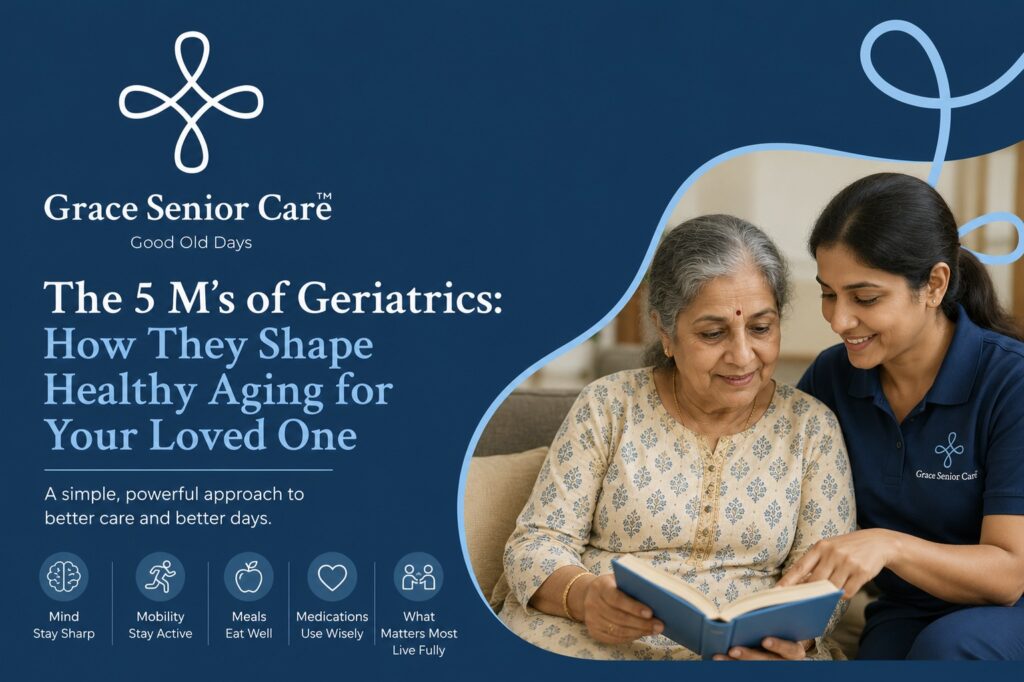
Healthy aging is not just about living longer—it is about living better. As people grow older, their physical health, mental well-being, medications, and personal priorities all become interconnected. This is where The 5 M’s of geriatrics play an important role in guiding care for older adults.
The framework of the 5 m’s of geriatrics—Mind, Mobility, Medications, Multicomplexity and what matters the Most helps families and caregivers understand aging in a more complete and compassionate way. It ensures that care is not only medically effective but also emotionally meaningful and personalized.
At Grace Senior Care, this approach is central to promoting dignity, independence and healthy aging for seniors.
1. Mind: Mental Health in Elderly Care
The first “M” focuses on the Mind, which includes memory, mood, cognition, and emotional well-being. Mental health in elderly individuals is often overlooked, but it is just as important as physical health.
Older adults may face conditions like depression, anxiety, dementia, or cognitive decline. Memory loss or confusion can affect daily life and independence. Social isolation and loneliness can further worsen emotional health.
Healthy Aging Tips for the Mind:
- Encourage social interaction with family and friends
- Engage in mentally stimulating activities like reading, puzzles, or games
- Maintain a daily routine for stability
- Seek early medical help for memory issues or mood changes
Supporting the mind is a key part of healthy aging tips, as emotional well-being directly impacts physical health and quality of life.
2. Mobility: Mobility Exercises for Elderly
Mobility refers to the ability to move freely and safely. It plays a major role in independence and confidence in older adults. Reduced mobility can lead to falls, weakness, and loss of self-reliance.
Mobility exercises for elderly individuals help improve strength, balance, flexibility, and coordination. Even simple movements can make a big difference.
Examples of Mobility Exercises:
- Walking or light jogging
- Chair-based exercises
- Stretching routines
- Balance training (standing on one leg with support)
- Yoga or gentle physiotherapy
Improving mobility is one of the most effective healthy aging tips because it helps seniors stay active and reduces the risk of injury. Regular movement also improves heart health and mental well-being.
3. Medications: Medication Management for Elderly and Seniors
Medication plays an important role in managing chronic conditions such as diabetes, hypertension, arthritis, and heart disease. However, improper use of medicines can lead to serious side effects or complications.
That is why medication management for elderly individuals is essential. Many seniors take multiple prescriptions, which increases the risk of missed doses or drug interactions.
Medication Management for Seniors Includes:
- Taking medicines at the correct time and dosage
- Regular review of prescriptions by doctors
- Avoiding self-medication
- Using pill organizers or reminders
- Monitoring side effects carefully
Effective medication management for seniors ensures safety, improves treatment outcomes, and reduces hospital visits. Caregivers and healthcare providers play a vital role in maintaining proper medication routines.
4. Multicomplexity: Multimorbidity in Older Adults and Multi Complexity in Elders
The fourth “M” refers to Multicomplexity, which means dealing with multiple health conditions at the same time. Many older adults experience multimorbidity in older adults, such as diabetes, heart disease, kidney problems, and arthritis occurring together.
This creates challenges in treatment because each condition may require different medications and care strategies. It also increases the risk of complications.
The term multi complexity in elders refers not only to medical conditions but also to psychological, social, and functional challenges. These may include cognitive decline, reduced mobility, financial concerns, and dependency on caregivers.
Managing Multicomplexity:
- Coordinated care from multiple healthcare providers
- Regular health check-ups
- Simplified medication plans
- Family involvement in care decisions
- Personalized care plans based on overall health
Understanding multicomplexity helps caregivers provide safer and more effective care for seniors.
5. What Matters the Most: Personalized and Meaningful Aging
The final “M”—what matters the most—focuses on personal values, goals, and quality of life. It shifts attention from treating diseases alone to understanding what brings meaning and happiness to an older person’s life.
For some seniors, it may be spending time with family. For others, it may be maintaining independence, pursuing hobbies, or staying spiritually connected.
Why It Matters:
- Encourages dignity and respect in care
- Improves emotional satisfaction
- Helps align medical care with personal goals
- Supports mental and emotional well-being
In healthy aging for seniors, this principle ensures that care is not just about survival but about living with purpose and joy.
The Importance of The 5 M’s of Geriatrics
The 5 M’s of geriatrics provide a holistic approach to elderly care. Instead of focusing on a single illness or symptom, it looks at the complete picture of aging.
Together, they help families and caregivers:
- Improve physical and mental health
- Ensure safe and effective treatments
- Enhance emotional well-being
- Promote independence and dignity
- Support personalized care decisions
By following this model, families can make better choices for their loved ones and ensure a higher quality of life.
Healthy Aging Tips for Seniors
In addition to the 5 M’s, here are some simple healthy aging tips that can support long-term well-being:
- Eat a balanced and nutritious diet
- Stay physically active every day
- Keep the mind engaged with learning and social activities
- Get regular health check-ups
- Maintain strong family and social connections
- Prioritize sleep and stress management
These habits support both physical and emotional health, making aging a more positive experience.
Conclusion
The 5 M’s of geriatrics—Mind, Mobility, Medications, Multicomplexity, and what matters the Most—provide a holistic approach to elderly care. They support better physical health, emotional well-being, and safer medical care. By focusing on these areas, families can promote healthier and more meaningful aging for seniors with dignity and compassion.
CONTACT US
Address : 50/24, Banashankri 6th phase, Hemmigepura, Bangalore 560060
Contact : 1800-10-20-21
Mail id : wecare@gracevive.com
FAQs
1. Why are the 5 M’s of geriatrics important?
They help families and caregivers understand all aspects of aging, including physical health, mental health, medication safety, and personal well-being.
2. How does the mind support healthy aging?
Mind focuses on mental health in elderly people, including memory, mood, and cognitive health, which are essential for healthy aging for seniors.
3. What are mobility exercises for elderly people?
Mobility exercises for elderly include walking, stretching, balance training, and light strength exercises that help improve movement and prevent falls.
4. What is medication management for seniors?
Medication management for seniors ensures medicines are taken correctly, safely, and on time to avoid side effects and improve treatment outcomes.
5. What does multimorbidity in older adults mean?
Multimorbidity in older adults refers to having multiple chronic health conditions at the same time, requiring coordinated and careful medical care.
6. What does “what matters the Most” mean in geriatrics?
It focuses on understanding a senior’s personal values, goals, and preferences to provide care that supports dignity and quality of life.


