


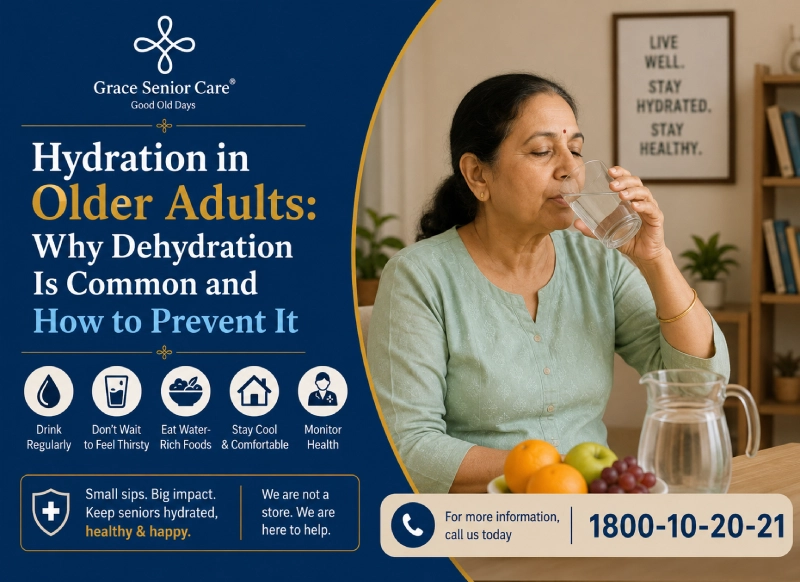
Hydration in Older Adults: Why Dehydration Is Common and How to Prevent It
Water is something most of us take for granted, until our body reminds us how much it actually needs it. For older adults, that reminder often comes too late. The importance of hydration in older adults cannot be overstated, yet dehydration remains one of the most common and most overlooked health issues among seniors. Understanding why this happens, and what families and caregivers can do about it, can make a real difference in quality of life.
Why Dehydration in Elderly Adults Is So Common
As we age, our bodies naturally hold less water. Muscle mass, which stores water, decreases, while fat tissue, which holds less, increases. On top of that, the sense of thirst weakens significantly with age. A younger person feels thirsty and drinks. An older adult may already be mildly dehydrated before they feel any urge to reach for a glass of water at all. This single change is one of the biggest causes of dehydration in seniors.
Other contributing factors include:
- Medications such as diuretics, laxatives, and certain blood pressure drugs that increase fluid loss
- Chronic conditions like diabetes or kidney disease that affect fluid balance
- Mobility issues that make it harder to get up and get a drink independently
- Cognitive decline, including memory-related conditions, where a person simply forgets to drink
- Fear of frequent bathroom trips, which leads many seniors to intentionally cut back on fluids
Taken together, these factors explain why dehydration in elderly adults is far more frequent than most families realize, and why it deserves ongoing attention rather than a one-time conversation.
Recognising the Signs of Dehydration in Older Adults
Catching dehydration early makes all the difference. Common elderly dehydration symptoms include dry mouth, fatigue, dizziness, confusion, dark-coloured urine, headaches, and low blood pressure upon standing. In more advanced cases, dehydration can lead to urinary tract infections, kidney problems, and even falls due to dizziness or disorientation.
Because thirst isn’t a reliable warning sign in older adults, caregivers should watch for these signs of dehydration in older adults rather than waiting for the person to say they’re thirsty. If an elderly loved one seems unusually tired, irritable, or confused, dehydration should always be one of the first things considered.
How to Prevent Dehydration in Elderly Individuals
The good news is that dehydration is highly preventable with a few consistent habits. Here are some practical hydration tips for seniors that families can start using right away:
- Set a routine. Encourage water with every meal and medication, not just when thirst strikes.
- Keep water visible and accessible. A filled glass or bottle within easy reach serves as a gentle, constant reminder.
- Offer variety. Herbal teas, diluted juices, soups, and water-rich fruits like watermelon and oranges all count toward daily fluid intake.
- Use reminders. A simple chart, alarm, or app can help track water intake for elderly people throughout the day.
- Watch the weather. Hot or humid days increase fluid needs significantly, even if the person isn’t physically active.
These small, consistent steps form the foundation of good senior citizen hydration care and can meaningfully reduce hospital visits related to dehydration.
Hydration as Part of Healthy Ageing
Good hydration does more than just quench thirst. It supports digestion, joint health, kidney function, skin health, and even cognitive clarity. That’s why healthy ageing and hydration go hand in hand; one genuinely supports the other. The benefits of drinking enough water for seniors extend to better energy levels, improved mood, fewer urinary infections, and better management of chronic conditions like hypertension and diabetes.
Effective elderly care hydration management isn’t about forcing fluids; it’s about building sustainable, comfortable habits that fit into a person’s daily rhythm. Preventing dehydration-related health problems early on also reduces the risk of more serious complications, including hospitalisation, especially in adults who already manage other health conditions.
Final Thoughts
As part of broader senior wellness and hydration tips, families should treat water intake with the same seriousness as medication schedules or doctor visits. A little awareness goes a long way in keeping older adults safe, alert, and comfortable.
If you’re concerned about hydration, mobility, joint pain, or overall wellness in an elderly family member, the team at Grace Senior Care is here to help. Their experienced staff can guide families through personalised care plans that support healthy ageing, safe mobility, and long-term wellbeing.
Grace Senior Care
📞 1800-10-20-21
✉️ wecare@gracevive.com
📍 50/24, Banashankri 6th Phase, Hemmigepura, Bangalore 560060
Frequently Asked Questions
- Why do older adults get dehydrated more easily than younger people? Ageing reduces the body’s water reserves and blunts the sense of thirst, so seniors often don’t feel thirsty even when their body needs fluids.
- What are the earliest signs of dehydration in seniors? Dry mouth, fatigue, dark urine, and mild confusion are usually the first indicators, and should not be ignored.
- How much water should an elderly person drink daily? This varies by individual health conditions, but generally 6-8 glasses a day is a good baseline; a doctor can recommend a more precise amount.
- Can certain medications cause dehydration in the elderly? Yes, diuretics, laxatives, and some blood pressure medications increase fluid loss and raise dehydration risk.
- When should I take an elderly loved one to a doctor for dehydration? If symptoms like confusion, rapid heartbeat, very low urine output, or dizziness upon standing appear, seek medical attention promptly.


