


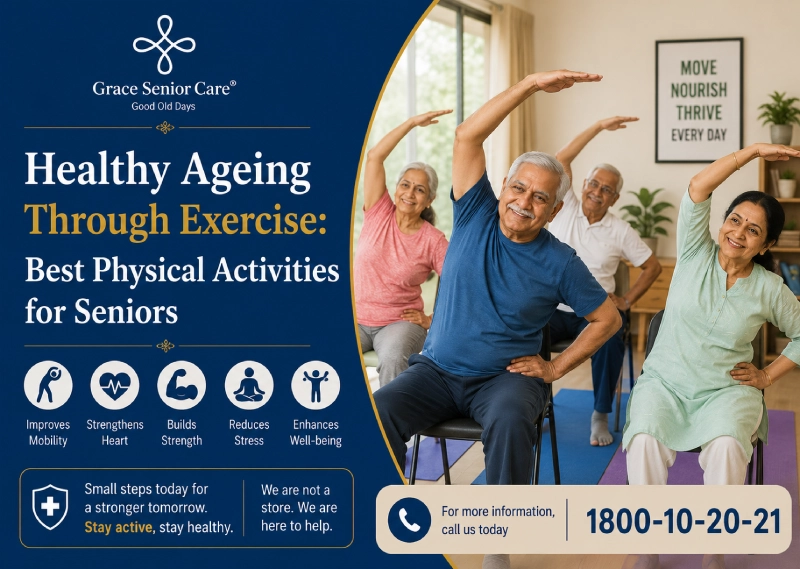
Healthy Ageing Through Exercise: Best Physical Activities for Seniors
Growing older doesn’t mean slowing down completely. In fact, staying active is one of the simplest and most powerful ways to protect your health as the years go by. Healthy ageing through exercise isn’t about pushing your body to its limits or chasing fitness trends, it’s about moving in ways that keep you strong, steady, and independent for as long as possible.
If you’re a senior (or caring for one) wondering where to start, here’s a friendly, practical guide to the best exercises for seniors, why they matter, and how to build a routine that actually sticks.
Why Exercise Matters More As We Age
As we get older, our bodies naturally lose muscle mass, bone density, and flexibility. This can lead to a higher risk of falls, joint pain, and chronic conditions like heart disease or diabetes. Regular physical activities for older adults help slow this decline, improve circulation, boost mood, and even support better sleep and memory. The goal isn’t to look like an athlete — it’s to keep doing the things you love, whether that’s gardening, playing with grandchildren, or simply walking to the market without getting winded.
Best Exercises for Seniors
1. Walking
Walking is often called the perfect exercise, and for good reason. It’s free, requires no equipment, and can be done almost anywhere. A daily 20–30 minute walk improves heart health, strengthens leg muscles, and lifts your mood. It’s a great entry point for anyone new to fitness.
2. Low-Impact Exercises for Elderly Adults
If joint pain or arthritis is a concern, low-impact exercises for elderly individuals like swimming, water aerobics, or stationary cycling are excellent choices. These activities get the heart pumping without putting stress on knees, hips, or ankles.
3. Strength Training for Seniors
Many people assume weight training is only for the young, but strength training for seniors is one of the best ways to combat muscle loss and maintain bone density. You don’t need heavy weights — resistance bands, light dumbbells, or even bodyweight exercises like chair squats and wall push-ups can make a real difference over time.
4. Balance Exercises for Older Adults
Falls are one of the biggest risks to independence in later life. Balance exercises for older adults, such as standing on one leg, heel-to-toe walking, or gentle tai chi, help improve stability and coordination. Practicing these a few times a week can significantly reduce fall risk.
5. Stretching and Flexibility Work
Simple stretches for the neck, shoulders, hips, and legs keep joints mobile and reduce stiffness. Yoga, in particular, combines flexibility, balance, and relaxation — a wonderful all-in-one option.
Building a Daily Exercise Routine for Seniors
Consistency matters more than intensity. A well-rounded daily exercise routine for seniors might look like this:
- Morning: 15–20 minutes of walking or light stretching
- Midday: Strength exercises 2–3 times a week (chair exercises, resistance bands)
- Evening: Balance practice or a short yoga session
Start slow, listen to your body, and gradually increase duration or intensity as strength and confidence build. Always check with a doctor before beginning a new fitness plan, especially if you have existing health conditions.
Senior Fitness Tips for Staying Motivated
- Set small, realistic goals rather than aiming for perfection
- Exercise with a friend or family member for accountability
- Wear comfortable, supportive footwear
- Stay hydrated and warm up before any activity
- Celebrate small wins — consistency beats intensity every time
These senior fitness tips make it easier to stay on track without feeling overwhelmed.
Embracing an Active Lifestyle for Seniors
Ultimately, an active lifestyle for seniors isn’t about a single workout — it’s a mindset. Taking the stairs instead of the elevator, tending to a garden, dancing to your favorite music, or joining a local walking group all count. Every bit of movement adds up, contributing to exercise for healthy ageing and a fuller, more independent life.
Get Expert Guidance from Grace Senior Care
If you’re dealing with joint pain, mobility issues, or simply want a personalized exercise plan suited to your health needs, the specialists at Grace Senior Care are here to help. Their team can guide you through safe, effective physical activities tailored for healthy ageing.
Contact Grace Senior Care:
📞 1800-10-20-21
📧 wecare@gracevive.com
📍 50/24, Banashankri 6th phase, Hemmigepura, Bangalore 560060
Frequently Asked Questions (FAQs)
- How often should seniors exercise? Most experts recommend at least 150 minutes of moderate activity per week, spread across most days, along with strength and balance exercises 2–3 times weekly.
- What is the safest exercise for seniors with joint pain? Low-impact activities like swimming, water aerobics, and gentle cycling are ideal since they minimize stress on the joints while still improving fitness.
- Can seniors start strength training if they’ve never lifted weights before? Yes. Starting with bodyweight exercises or light resistance bands under guidance is a safe and effective way to build strength gradually.
- How can balance exercises help prevent falls? Balance exercises strengthen the muscles and improve coordination needed to stay steady, significantly reducing the risk of trips and falls.
- When should a senior consult a doctor before exercising? If there are existing health conditions like heart disease, severe arthritis, or recent surgery, it’s important to consult a doctor or specialist, such as those at Grace Senior Care, before starting a new exercise routine.


