


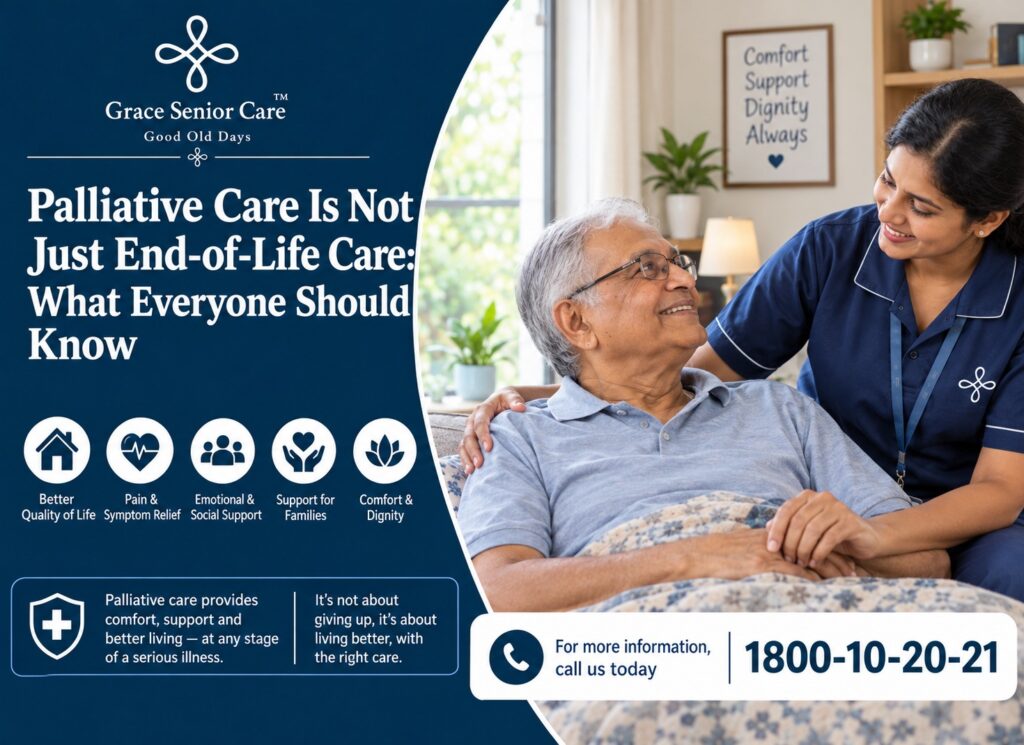
Palliative Care Is Not Just End-of-Life Care: What Everyone Should Know
Table of Contents
- Introduction
- What Is Palliative Care? (Palliative Care Meaning)
- Is Palliative Care Only for End-of-Life?
- Palliative Care vs End-of-Life Care
- Who Can Benefit from Palliative Care?
- Palliative Care Benefits
- Benefits of Early Palliative Care
- How Grace Senior Care Can Help
- Frequently Asked Questions
Introduction
Say the words “palliative care” in a family gathering and watch the room go quiet. Many of us hear them and assume the doctors have given up. That belief is common, and it is wrong. Palliative care is about living as well as possible, for as long as possible, whatever the diagnosis. Let’s clear up the confusion.
What Is Palliative Care? (Palliative Care Meaning)
If you have been asking yourself what is palliative care, here is the simple answer. It is specialised medical care for people living with a serious or long-term illness. The focus is on relieving symptoms, pain, and stress, not only on treating the disease itself.
The palliative care meaning goes beyond medicine. A team of doctors, nurses, counsellors, and caregivers looks after the whole person: physical comfort, emotional wellbeing, and practical needs. They also support the family, who often carry a heavy load of their own. Palliative care works alongside curative treatment such as chemotherapy, dialysis, or heart medication. It does not replace it.
Is Palliative Care Only for End-of-Life?
This is one of the most searched questions, and the honest answer is no. When people ask, “Is palliative care only for end-of-life?”, they are usually mixing it up with hospice care. Palliative care can begin the day a serious illness is diagnosed. Some people receive it for months or even years, and many go on to recover or stabilise. It is a layer of support, not a final chapter.
Palliative Care vs End-of-Life Care
The difference between palliative care vs end-of-life care is a matter of timing and goals.
- Palliative care can be given at any stage of a serious illness, alongside treatments meant to cure or control the disease.
- End-of-life care is for the final weeks or months, when a cure is no longer possible and the aim is a peaceful, dignified passing.
In short, all end-of-life care includes palliative principles, but palliative care is much broader than end-of-life care. Seeing this difference removes a lot of fear and helps families ask for help sooner.
Who Can Benefit from Palliative Care?
Many people ask who can benefit from palliative care. Anyone living with a serious, chronic, or life-limiting condition can, including people with:
- Cancer
- Heart failure
- COPD and other lung diseases
- Kidney failure
- Parkinson’s disease, dementia, or Alzheimer’s
- Stroke or long-term neurological conditions
- Frailty and age-related decline
Age doesn’t matter. Children, adults, and seniors all qualify. If an illness is affecting daily life through pain, breathlessness, fatigue, anxiety, or sleepless nights, palliative care can help.
Palliative Care Benefits
The palliative care benefits are practical and deeply human:
- Better symptom control: pain, nausea, breathlessness, and fatigue are managed actively.
- Emotional support: counselling helps patients and families deal with fear, sadness, and uncertainty.
- Clearer communication: the team helps you understand your options and make confident decisions.
- Fewer hospital visits: good home-based support can prevent avoidable emergencies.
- Relief for caregivers: families get guidance, training, and much-needed rest.
- Dignity and choice: care follows the patient’s values and wishes.
Benefits of Early Palliative Care
Research consistently shows that the benefits of early palliative care are significant. When support starts soon after diagnosis, patients often report a better quality of life, less depression, and better tolerance of treatment. Families feel more prepared and less overwhelmed, and difficult conversations happen calmly rather than in a crisis.
Waiting until things become desperate means suffering that could have been eased. Early palliative care gives people time to plan, to choose, and simply to feel more like themselves.
How Grace Senior Care Can Help
At Grace Senior Care, we believe comfort and compassion should never be delayed. Our team supports seniors and families with dignified, personalised care that focuses on comfort, emotional wellbeing, and quality of life. If you or a loved one could use support, please get in touch:
Contact Grace Senior Care:
Phone: 1800-10-20-21
Mobile: +91 7337833750
Address: 50/24, Banashankri 6th phase, Hemmigepura, Bangalore 560060
Frequently Asked Questions
- Does choosing palliative care mean stopping treatment?
No. It is provided alongside your regular treatment and simply adds an extra layer of comfort and support. - When should someone start palliative care?
Ideally, soon after a serious illness is diagnosed, or whenever symptoms and stress begin affecting daily life. - Is palliative care the same as hospice care?
No. Hospice is for the final phase of life, while palliative care is available at any stage of illness. - Can palliative care be given at home?
Yes. Many services, including home-based support, help patients stay comfortable in familiar surroundings. - Who is part of a palliative care team?
Usually doctors, nurses, counsellors, therapists, and trained caregivers working together with the family.


