


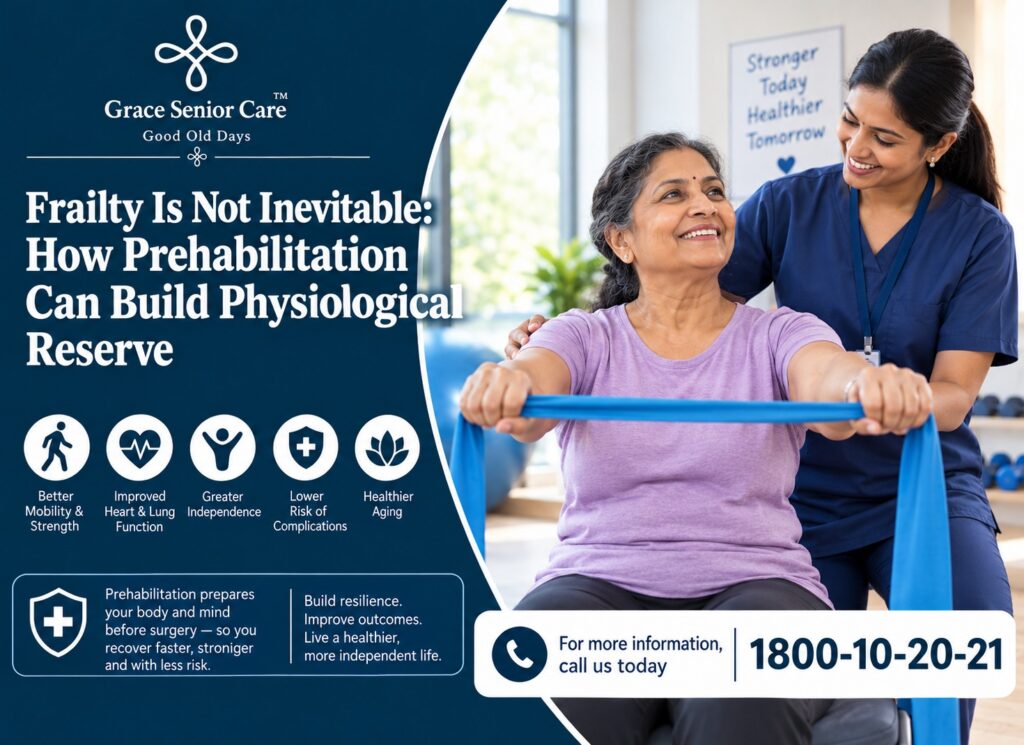
Frailty Is Not Inevitable: How Prehabilitation Can Build Physiological Reserve
Table of Contents
- Understanding Frailty: Why It Isn’t Just “Getting Old”
- What Is a Physiological Reserve?
- How Prehabilitation Can Build Physiological Reserve
- Key Prehabilitation Benefits
- Prehabilitation for Frailty: What a Good Programme Looks Like
- Getting Started at Home
- Support from Grace Senior Care
- Frequently Asked Questions
Understanding Frailty: Why It Isn’t Just “Getting Old”
Many families quietly accept that Amma or Appa will “slow down” with age, get weaker, and eventually need help with everything. But frailty in older adults is not the same as ageing. It is a medical state in which the body loses strength, energy, and resilience, so even a minor illness, fall, or hospital stay can trigger a major decline.
Common signs include unintended weight loss, constant tiredness, slow walking speed, weak grip, and low physical activity. The good news is that frailty exists on a spectrum, and it can often be slowed, stopped, or even partly reversed when we act early.
What Is a Physiological Reserve?
Think of physiological reserves as your body’s savings account. Every organ, whether heart, lungs, muscles, or brain, has extra capacity beyond what it needs for daily life. When stress hits, such as surgery, infection, or a fall, the body draws from this account.
As we age, deposits slow down and withdrawals continue. If the balance runs low, recovery becomes slow and incomplete. Building up that reserve before a health challenge arrives is the whole idea behind prehabilitation.
How Prehabilitation Can Build Physiological Reserve
Rehabilitation helps you recover after something goes wrong. Prehabilitation works the other way round: it prepares your body beforehand. How Prehabilitation Can Build Physiological Reserve comes down to four practical pillars:
- Strength and balance training: Gentle resistance work and balance exercises rebuild muscle mass, improve stability, and reduce fall risk.
- Nutrition: Adequate protein, calories, vitamins, and hydration give muscles the raw material to grow and repair.
- Cardio-respiratory conditioning: Walking, cycling, or breathing exercises improve stamina and oxygen use.
- Mental and emotional readiness: Reducing anxiety, improving sleep, and staying socially connected all support physical resilience.
Together, these steps rebuild the body’s buffer so that it can handle stress more confidently.
Key Prehabilitation Benefits
The prehabilitation benefits for seniors go well beyond fitness. Here is what a consistent programme can offer:
- Better surgical outcomes: People who prepare before a planned operation often tolerate anaesthesia better and recover faster.
- Fewer complications: A stronger body is generally better able to cope with infections and post-operative setbacks.
- Shorter recovery time: Preparing beforehand can help people return to their routines sooner.
- Improved independence: Stronger legs and better balance mean easier bathing, dressing, and walking without help.
- Lower fall risk: Balance and strength training directly address one of the biggest threats to older adults.
- Greater confidence and mood: Seeing progress, however small, restores a sense of control and hope.
Prehabilitation for Frailty: What a Good Programme Looks Like
Prehabilitation for frailty should never be one-size-fits-all. A safe and effective plan usually includes:
- A thorough assessment: Reviewing medical history, medications, mobility, nutrition, and cognition.
- Personalised goals: For example, “climb stairs without resting” or “walk to the temple independently.”
- Progressive exercise: Starting light and gradually increasing intensity under professional guidance.
- Nutrition counselling: Tailored to appetite, dental health, and any conditions such as diabetes.
- Regular monitoring: Adjusting the plan as strength and confidence improve.
Consistency matters more than intensity. Even a few short, well-supervised sessions each week can make a real difference over time.
Getting Started at Home
You don’t need a gym to begin. Small habits add up:
- Take a short walk every day, even ten minutes.
- Practise standing up from a chair several times, holding on if needed.
- Include an egg, dal, curd, paneer, or another protein source in every meal.
- Drink enough water and get sunlight for vitamin D.
- Stay socially active with family, friends, or community groups.
Always check with a doctor or physiotherapist before starting a new exercise routine, especially if there are heart, joint, or balance concerns.
Support from Grace Senior Care
Building strength in later life is easier with the right people beside you. Grace Senior Care in Bangalore offers compassionate, professional support that helps older adults stay active, safe, and independent. Their caring team understands that ageing well is about more than treating illness; it is about protecting dignity, strength, and quality of life.
Contact Grace Senior Care:
Phone: 1800-10-20-21
Mobile: +91 7337833750
Address: 50/24, Banashankri 6th phase, Hemmigepura, Bangalore 560060
Frequently Asked Questions
- Is frailty in older adults reversible?
In many cases, yes, especially in the early or “pre-frail” stages. Exercise, better nutrition, medication review, and social engagement can improve strength and function. - At what age should someone start prehabilitation?
There is no fixed age. It is most useful when a person shows early signs of weakness or is preparing for surgery or a major medical treatment. Starting earlier generally gives better results. - How long does a prehabilitation programme last?
It depends on the person and the goal. Before planned surgery, programmes often run for several weeks. For general frailty, ongoing habits work best. - Is prehabilitation safe for people with chronic conditions?
Generally yes, when designed and supervised by qualified professionals who consider conditions such as diabetes, arthritis, or heart disease. A medical check first is essential. - Can prehabilitation be done at home?
Yes. Many exercises, nutrition changes, and lifestyle habits can be done at home, ideally with guidance from a trained caregiver or therapist to keep things safe and progressive.


