

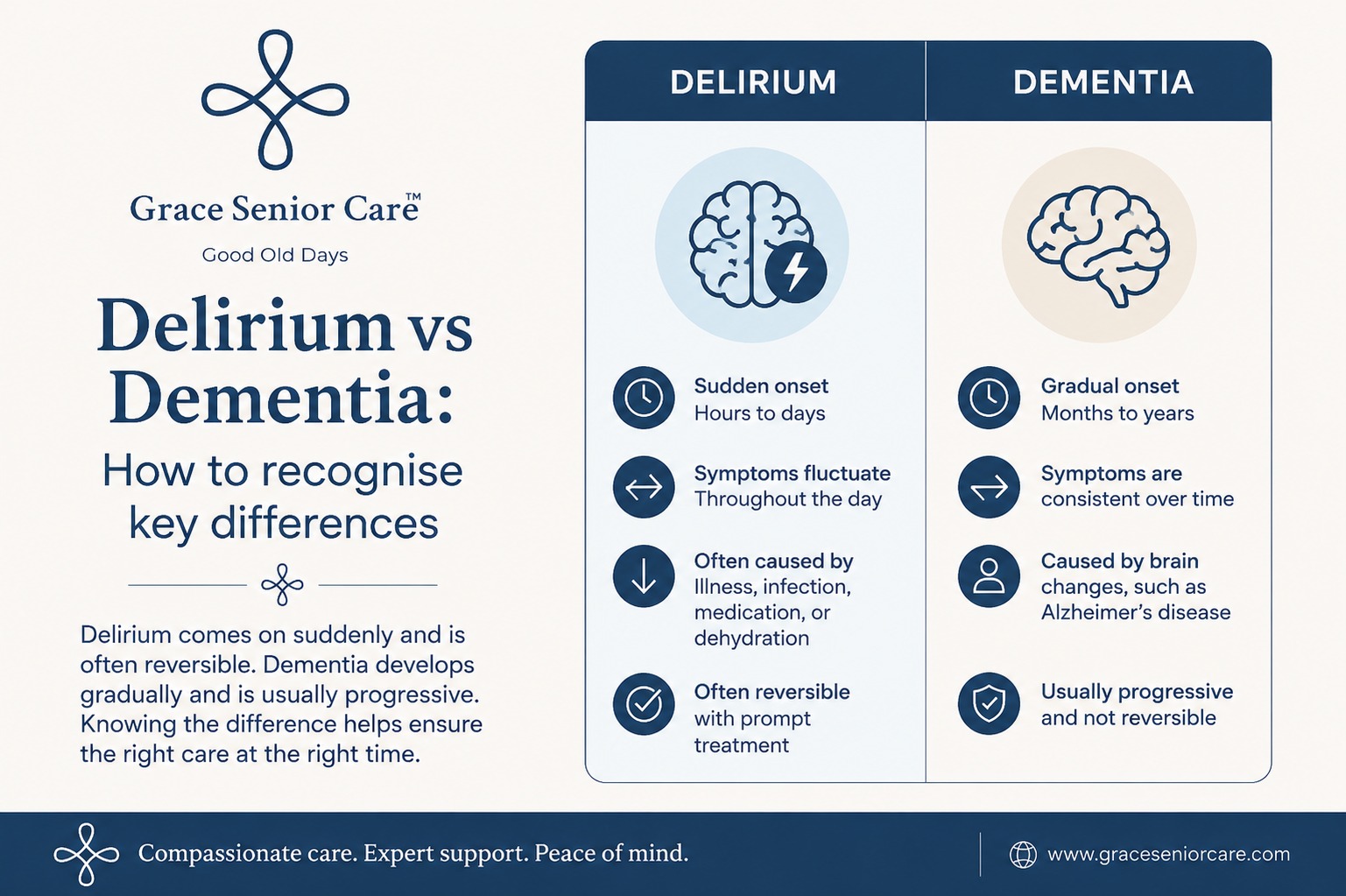
Understanding the difference between Delirium and Dementia is essential, especially when caring for older adults. Both conditions affect memory, thinking, and behavior, but they are not the same. Confusing one for the other can delay the right treatment and lead to serious complications. By learning how to recognise delirium and dementia, you can respond quickly and appropriately when symptoms appear.
What is Delirium?
Delirium is a sudden and often severe change in mental status. It develops quickly—sometimes within a few hours or days—and is usually triggered by an underlying medical condition. Individuals with delirium may appear confused, disoriented, or unable to focus. Their level of awareness can fluctuate throughout the day, making them seem better at one moment and worse the next.
This condition is commonly seen in hospitalized patients, particularly older adults. Causes can include infections, medication side effects, dehydration, or complications after surgery. The key feature that sets delirium apart is its rapid onset and the possibility of reversal once the underlying issue is treated.
What is Dementia?
Dementia, on the other hand, is a gradual and progressive decline in cognitive abilities. It develops slowly over months or even years and interferes with daily life. Unlike delirium, dementia is not caused by a temporary issue but by long-term damage to brain cells.
One of the most common causes of dementia is Alzheimer’s disease, though there are other types such as vascular dementia and Lewy body dementia. People with dementia often experience memory loss, difficulty with language, poor judgment, and changes in personality. As the condition progresses, they may require increasing levels of support.
Difference Between Delirium and Dementia
Aspect | Delirium | Dementia |
Onset & Progression | Sudden onset; symptoms fluctuate | Gradual onset; steadily worsens |
Attention | Severely impaired; difficulty focusing | Usually normal in early stages |
Consciousness | Altered awareness; may be drowsy or hyper-alert | Generally alert until later stages |
Sleep Pattern | Disturbed sleep-wake cycle; restless at night | Sleep changes occur gradually |
Reversibility | Often reversible with treatment | Usually irreversible and progressive |
Delirium and Dementia Symptoms
Recognising delirium and dementia symptoms is key to early diagnosis.
Delirium Symptoms:
- Sudden onset of confusion
- Disorganized thinking
- Hallucinations may occur
- Rapid mood changes (agitated to withdrawn)
- Symptoms fluctuate throughout the day
Dementia Symptoms:
- Gradual onset and progression
- Memory loss (especially recent events)
- Difficulty with communication
- Poor decision-making ability
- Trouble performing daily tasks
- Gradual personality and behavior changes
Signs of Delirium vs Dementia
The signs of delirium vs dementia can sometimes overlap, but the pattern of symptoms helps distinguish them. Delirium is marked by sudden confusion, difficulty maintaining attention, and rapid changes in alertness. A person may not recognize familiar surroundings or may have trouble understanding simple instructions.
Dementia, in contrast, presents as a steady decline. Someone may repeatedly forget appointments, misplace items, or get lost in familiar places. Unlike delirium, the confusion is consistent rather than fluctuating. Hallucinations may occur in both conditions, but they are more common and sudden in delirium.
How to Recognise Delirium and Dementia ?
To understand how to recognise delirium and dementia, it is important to observe the timeline and behavior closely. If confusion appears suddenly, worsens quickly, and varies throughout the day, delirium is more likely. If the decline has been gradual and consistent over time, dementia is the more probable cause.
Attention is another strong indicator. In delirium, the person cannot stay focused, while in dementia, attention is relatively intact in the early stages. Looking for potential triggers also helps. Delirium often follows an illness, infection, or medication change. Dementia does not have a single immediate trigger and progresses independently.
When Delirium and Dementia Occur Together ?
It is possible for both conditions to exist at the same time. In fact, individuals with dementia are more vulnerable to developing delirium, especially during hospital stays or acute illnesses. This overlap can make diagnosis challenging, as delirium symptoms may be mistaken for a sudden worsening of dementia.
Recognising this combination is important because delirium requires urgent medical attention. Treating the underlying cause can significantly improve the patient’s condition, even if dementia is present.
Why Early Recognition Matters ?
Understanding the difference between delirium and dementia is not just a medical concern—it has real-life implications for care and recovery. Delirium is a medical emergency that needs immediate attention. If left untreated, it can lead to serious complications or prolonged hospitalization.
Dementia, while not reversible, benefits from early diagnosis as it allows for better planning, treatment, and support. Identifying symptoms early can improve quality of life and help families prepare for future care needs.
Conclusion
Delirium vs dementia is an important distinction that affects timely care. Delirium is sudden and often reversible, while dementia develops gradually and is long-term. Recognising symptoms early and understanding their differences helps ensure the right care at the right time.
CONTACT US
Address 50/24, Banashankri 6th phase, Hemmigepura, Bangalore 560060
Contact 1800-10-20-21
Mail id : wecare@gracevive.com
FAQs
1. What is the difference between Delirium and Dementia?
Delirium starts suddenly and is usually temporary, while dementia develops slowly and is long-term.
2.How to recognise delirium and dementia?
Sudden, fluctuating confusion points to delirium; gradual memory loss and steady decline suggest dementia.
3.What are common delirium and dementia symptoms?
Delirium causes confusion, poor attention, and hallucinations. Dementia leads to memory loss and reduced thinking ability over time.
4.What are signs of delirium vs dementia?
Delirium shows rapid changes and disorientation. Dementia shows consistent memory issues and gradual decline.
5. Is delirium reversible?
Delirium is often reversible with treatment; dementia is usually not.
6.Can both occur together?
Yes, people with dementia can develop delirium during illness or stress.