


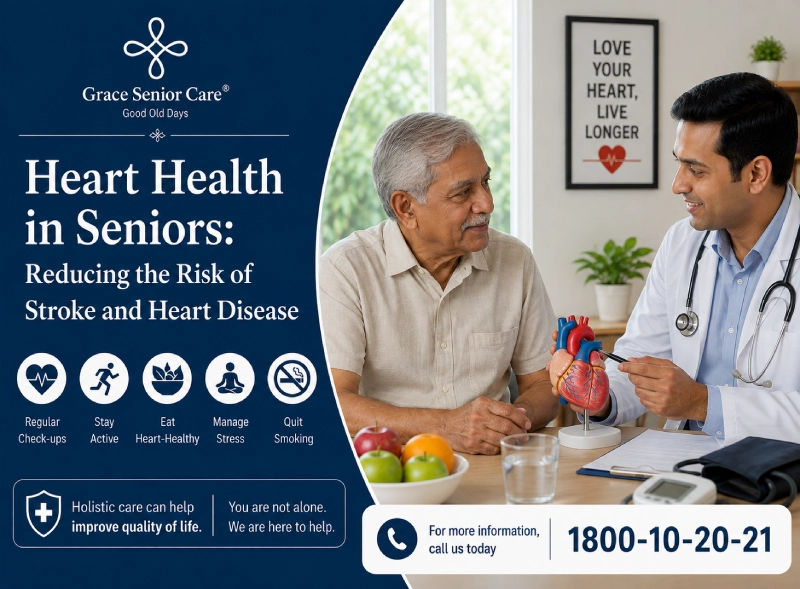
Heart Health in Seniors: Reducing the Risk of Stroke and Heart Disease
As we grow older, our heart works a little harder to keep up with us. Blood vessels stiffen, cholesterol tends to build up, and years of daily habits start showing their effects. That’s why heart health tips for seniors aren’t just good advice, they’re essential for a longer, more independent life. The good news is that preventing heart disease in older adults is very much possible with the right knowledge and small, consistent changes.
Why Senior Heart Care Deserves Extra Attention
The heart doesn’t announce its struggles loudly. Many older adults live with narrowed arteries or irregular rhythms for years before anything feels “wrong.” This is precisely why senior heart care should be proactive rather than reactive. Families and caregivers play a huge role here — noticing fatigue, breathlessness, or swelling in the legs early can make the difference between a manageable condition and a medical emergency.
Understanding the Risk Factors
Knowing the risk factors for heart disease in elderly individuals helps families plan better. The most common ones include:
- High blood pressure and high cholesterol
- Diabetes or prediabetes
- A sedentary lifestyle
- Smoking or long-term tobacco use
- Family history of heart disease or stroke
- Obesity and poor sleep quality
Most of these are manageable with medical guidance and lifestyle adjustments, which is why early awareness matters so much.
Recognizing the Warning Signs
Spotting heart disease symptoms in seniors early can genuinely save lives. Watch for:
- Chest discomfort, pressure, or tightness
- Shortness of breath during light activity
- Unexplained fatigue or dizziness
- Swelling in the ankles or feet
- Irregular or rapid heartbeat
For stroke specifically, remembering the acronym FAST — Face drooping, Arm weakness, Speech difficulty, Time to call emergency services — remains one of the most effective tools for stroke prevention in seniors. Acting within minutes of these symptoms can prevent lasting damage.
Building a Healthy Lifestyle for Senior Citizens
A healthy lifestyle for senior citizens doesn’t require drastic changes overnight. It’s about consistency. Simple daily habits like reducing salt intake, staying hydrated, managing stress through hobbies or meditation, and getting seven to eight hours of quality sleep all contribute meaningfully to heart health over time.
Exercise for elderly heart health doesn’t mean intense workouts. Gentle, regular movement is what truly protects the cardiovascular system. Consider:
- A 20–30 minute walk most days of the week
- Light stretching or yoga for flexibility and circulation
- Chair exercises for those with limited mobility
- Swimming or water aerobics, which are easy on the joints
Even modest activity lowers blood pressure, improves circulation, and strengthens the heart muscle over time.
Eating for a Stronger Heart
A thoughtful diet for a healthy heart in seniors focuses on whole, unprocessed foods. Some practical guidelines:
- Choose whole grains over refined carbohydrates
- Include more fruits, vegetables, and legumes
- Opt for healthy fats like olive oil, nuts, and fish
- Limit red meat, fried foods, and added sugar
- Watch portion sizes and sodium levels closely
Small dietary shifts, sustained over months and years, add up to meaningful protection against heart disease.
The Importance of Routine Screenings
Regular heart checkups for seniors allow doctors to catch problems before they become serious. Blood pressure readings, cholesterol panels, ECGs, and diabetes screening should become a normal part of annual health visits after 60. These checkups are also the best way to support age-related heart problems prevention, since many conditions like atrial fibrillation or arterial stiffening develop silently and are only detectable through testing.
Bringing It All Together
Protecting the heart in later years is a combination of awareness, movement, nutrition, and medical partnership. None of these steps need to feel overwhelming starting with one or two changes and building from there is often the most sustainable approach.
Get Expert Guidance at Grace Senior Care
If you or a loved one would like a personalized heart health assessment, the team at Grace Senior Care is here to help with comprehensive senior cardiac care, routine screenings, and lifestyle guidance tailored to your needs.
📞 Phone: 1800-10-20-21
📧 Email: wecare@gracevive.com
📍 Address: 50/24, Banashankri 6th Phase, Hemmigepura, Bangalore 560060
Frequently Asked Questions
- At what age should seniors start regular heart checkups? Most doctors recommend annual heart screenings starting at age 50–60, or earlier if there’s a family history of heart disease.
- What is the single best exercise for heart health in older adults? Walking is widely considered the safest and most effective exercise, offering strong cardiovascular benefits with minimal joint strain.
- Can stroke be prevented in seniors with high blood pressure? Yes. Managing blood pressure through medication, diet, and regular monitoring significantly reduces stroke risk.
- Are heart disease symptoms different in older adults compared to younger people? Often, yes. Seniors may experience subtler signs like fatigue or breathlessness rather than dramatic chest pain, making regular checkups important.
- What foods should seniors avoid for better heart health? Processed foods, excess salt, fried items, and foods high in added sugar should be limited to protect heart health.


