


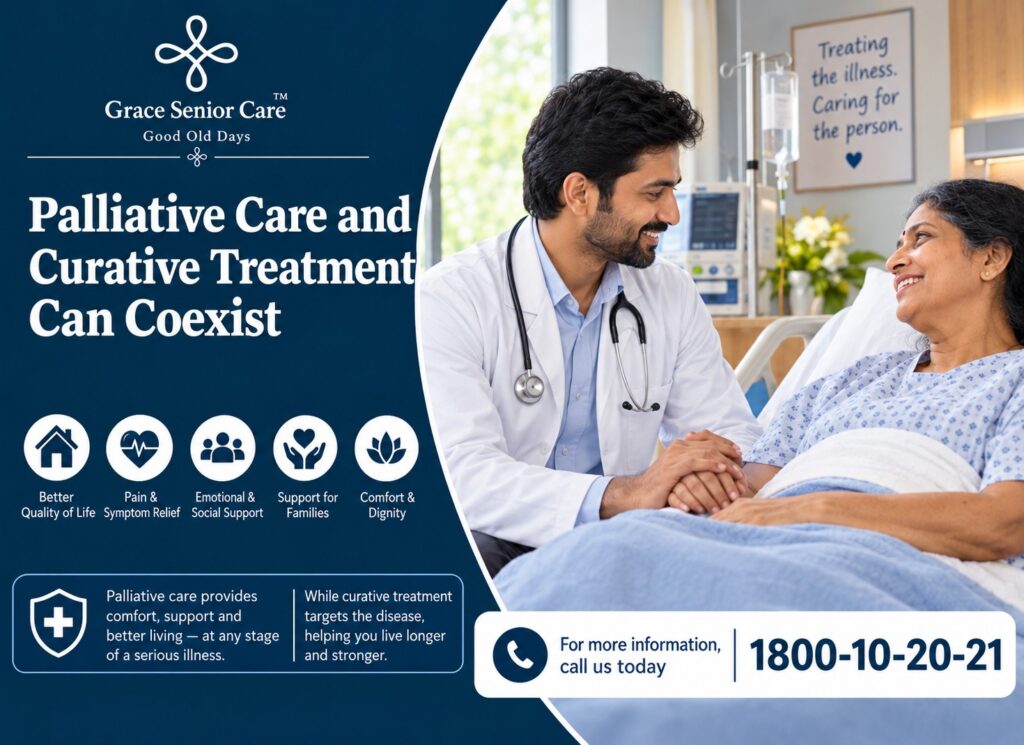
Palliative Care and Curative Treatment Can Coexist
Table of Contents
- Introduction: A Common Misunderstanding
- What Is Palliative Care?
- What Is Curative Treatment?
- Difference Between Palliative and Curative Care
- Palliative Care vs Curative Care: Do You Have to Choose?
- Benefits of Palliative Care with Curative Treatment
- When Should You Begin?
- How Grace Senior Care Can Help
- Frequently Asked Questions
Introduction: A Common Misunderstanding
When a doctor mentions palliative care, many families hear one thing: “there’s nothing more we can do.” That belief is one of the biggest myths in modern medicine, and it stops many people from getting support they badly need.
The truth is much more hopeful. Palliative care and curative treatment are not opposites. They can work side by side, from the day of diagnosis, to help a person feel better while the medical team works toward recovery or long-term control of the illness.
What Is Palliative Care?
Palliative care is specialised medical care for people living with a serious illness such as cancer, heart failure, kidney disease, COPD, or dementia. Its goal is to relieve symptoms, reduce stress, and improve quality of life for both the patient and the family.
It looks after the whole person. That includes pain, breathlessness, nausea, fatigue, anxiety, sleep problems, and the emotional weight of a difficult diagnosis. A palliative team usually includes doctors, nurses, counsellors, and caregivers who work together with your primary doctors.
What Is Curative Treatment?
Curative treatment aims to cure a disease or push it into remission. Surgery, chemotherapy, radiation, dialysis, antibiotics, and other therapies all fall into this group. The focus is on treating the illness itself.
These treatments can be tough on the body. They often bring side effects, and that is exactly where supportive care makes a difference.
Difference Between Palliative and Curative Care
Understanding the difference between palliative and curative care clears up a lot of confusion:
- Curative care targets the disease. Its aim is to cure, or to stop the illness from progressing.
- Palliative care targets the person. Its aim is comfort, symptom relief, and emotional and practical support.
- Curative care has a defined course, such as a set number of chemo cycles. Palliative care can continue as long as it is needed.
- Curative care is delivered by specialists treating a particular condition. Palliative care is a team approach that looks at the patient and family as a whole.
One does not replace the other. They simply answer different needs.
Palliative Care vs Curative Care: Do You Have to Choose?
Many people think of palliative care vs curative care as an either-or decision. It is not. You can receive palliative care with curative treatment at the same time, and at any stage of a serious illness.
Hospice care is different. It is for people whose curative treatment has stopped, usually in the last months of life. Palliative care has no such condition. Someone can be getting chemotherapy on Monday and a palliative consultation on Tuesday. Curative treatment and palliative care are really two layers of support working together.
Benefits of Palliative Care with Curative Treatment
The benefits of palliative care with curative treatment are well documented, and families often notice them quickly:
- Better symptom control. Pain, nausea, and fatigue from treatment are managed early instead of being endured.
- Stronger treatment tolerance. Patients who feel better are more likely to complete their full course of treatment.
- Emotional support. Counselling helps patients and families cope with fear, stress, and uncertainty.
- Clearer communication. The palliative team helps families understand options, so decisions are made with confidence.
- Relief for caregivers. Family members get guidance, rest, and practical help, which reduces burnout.
- Improved quality of life. Studies have linked early palliative involvement to better well-being and, in some serious illnesses, longer survival.
When Should You Begin?
The best time is early, ideally soon after a serious diagnosis. Waiting until a crisis means months of avoidable discomfort. If you or a loved one is dealing with a long-term or life-limiting illness, ask the doctor about palliative support right away. Asking for it is not giving up. It is asking for better care.
How Grace Senior Care Can Help
At Grace Senior Care, we believe every senior deserves comfort, dignity, and compassionate support, whatever stage of illness they are in. Our caring team works alongside your doctors to make sure symptom relief and emotional support go hand in hand with medical treatment.
Contact Grace Senior Care:
Phone: 1800-10-20-21
Mobile: +91 7337833750
Address: 50/24, Banashankri 6th phase, Hemmigepura, Bangalore 560060
Frequently Asked Questions
- Does choosing palliative care mean I am giving up on treatment?
No. Palliative care works alongside treatment that aims to cure. You can continue every recommended therapy while getting extra support for symptoms and stress. - Is palliative care the same as hospice care?
No. Hospice is for the final phase of life when curative treatment has ended. Palliative care can begin at diagnosis and continue for years. - Who can receive palliative care with curative treatment?
Anyone with a serious illness, including cancer, heart disease, kidney failure, lung disease, neurological conditions, or advanced age-related illness, regardless of age or stage. - What is the main difference between palliative and curative care?
Curative care treats the disease itself, while palliative care treats the person’s symptoms, comfort, and emotional needs. Together they give more complete care. - Does palliative care take place only in hospitals?
No. It can be provided in hospitals, clinics, or at home. Home-based support is especially helpful for seniors who are more comfortable in familiar surroundings.


